
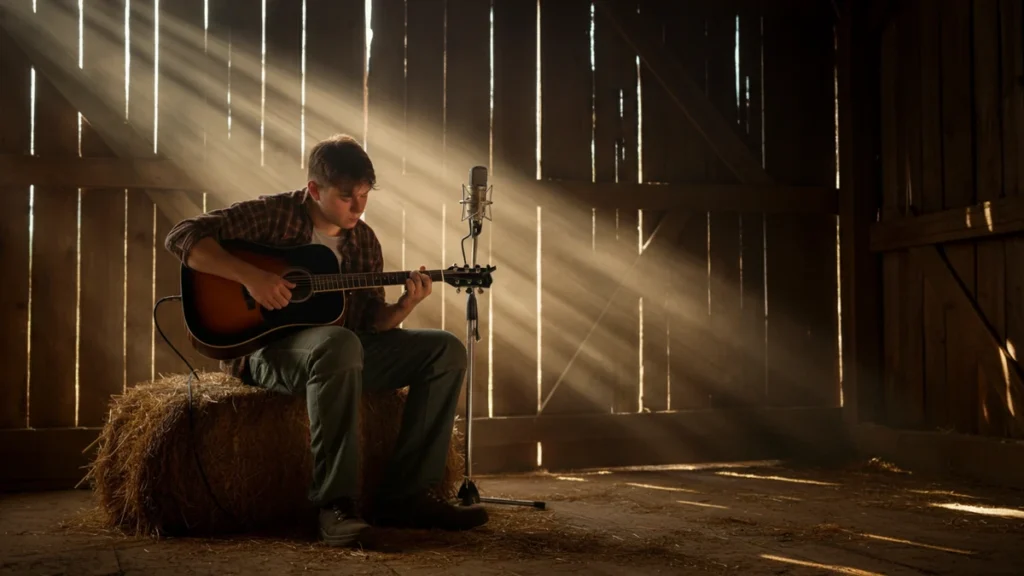
A musician plays an acoustic guitar while sitting on a hay bale inside a rustic barn with sunlight streaming in. | RockCharts.News - AI Generated
The New Sound of the Soil
In an era dominated by digital sleekness and urban-centric narratives, a curious counter-movement is taking root in the music world. Forget the neon-drenched cityscapes of synth-pop and the metropolitan angst of modern hip-hop for a moment. Instead, picture sprawling fields, weathered barns, and the quiet hum of the heartland. This is a new frontier. Many artists are finding their voice here, proving that the way **agriculture is shaping the genre conversation** is one of today’s most unexpected and compelling trends. It’s a sonic shift, trading concrete for soil. This movement cares less about origin and more about what you can grow.
This isn’t simply a rehash of classic country or folk. It’s a hybrid sound, often called “agri-rock” or “pastoral-punk” by online communities. This music merges rock’s raw energy with indie’s introspection. It explores themes of cultivation, sustainability, and a deep, often complicated, relationship with the land. Artists look past the club and toward the countryside. They find inspiration in nature’s cycles, not the 24-hour news cycle. This burgeoning scene suggests a collective yearning for authenticity. It’s a reconnection with the tangible in an increasingly virtual world.
The Historical Roots of Agri-Rock
While the current trend feels fresh, its seeds were planted long ago. The romanticization and critique of rural life have been a constant presence in popular music. An artist like Johnny Cash embodied a connection to the working man. His salt-of-the-earth persona often reflected someone who worked the land. But perhaps the most direct ancestor of the modern movement is Neil Young. His seminal 1972 album, *Harvest*, was more than just songs. It was a statement of intent, a retreat from rock stardom’s chaos to his ranch’s quiet solitude.
Heartland rockers carried this ethos forward in the 1980s. John Mellencamp built a career on anthems about small-town American life. He captured both its charm and its decline. This concern for American farmers led to Farm Aid‘s creation in 1985. Willie Nelson, Neil Young, and John Mellencamp founded it. The annual benefit concert became a cultural touchstone. It powerfully reminded people of agriculture’s vital role and the struggles family farmers faced. It established a direct, activist link between music and the agrarian world. This link continues to resonate today, providing a foundational blueprint for artists who use their music as a platform for environmental and social consciousness.
The New Crop: Artists Leading the Movement
Today’s artists are building on that legacy with a distinctly modern sensibility. The movement is diverse, spanning multiple genres but united by a common thematic thread. Consider Sturgill Simpson’s career. He shattered country music conventions. His records blend psychedelic rock, soul, and philosophical inquiry. His work isn’t exclusively about farming. Yet, it evokes a deep sense of place and questions modern life. This aligns perfectly with the agri-rock spirit.
Indie folk bands like Fleet Foxes similarly paved the way. Bon Iver’s solitary, cabin-in-the-woods creativity also contributed. They made rustic seclusion a core part of their aesthetic. This created a space where quiet, pastoral themes could be seen as artistically vital and commercially viable. Now, a new generation is pushing the envelope even further.
Take, for instance, the emerging indie band The Gilded Plow. Their recent album, *Digital Dust Bowl*, has become a critical darling and a touchstone for the scene. Publications like Pitchfork and Rolling Stone lauded the album. It masterfully blends fuzzed-out guitars and driving rhythms with field recordings of cicadas and vintage tractor engines. The lead single, “Tractor Beam Blues,” is a haunting, reverb-drenched track. It’s about genetic crop modification and economic pressure on small farms. It clearly shows how **agriculture is shaping the genre conversation**. The song is both musically innovative and lyrically profound.
Beyond the Music: The Agri-Core Aesthetic
This movement is about more than just sound; it’s a holistic aesthetic. The visual language of agri-rock is as important as its sonic one. Music videos are shot in golden-hour fields and decaying barns. Album covers feature stark, agrarian landscapes. Fashion leans into durable, functional workwear. Brands like Carhartt and Dickies have become unofficial uniforms for the scene. It’s a visual rejection of fast fashion and disposable culture, favoring things that are built to last.
This aesthetic extends to live performances. You might see these bands at traditional venues. However, they are equally at home at outdoor festivals. These festivals emphasize a connection to nature, like the legendary Newport Folk Festival or smaller, boutique events held on actual working farms. This focus on sustainability isn’t just for show. Many artists here vocally advocate for regenerative agriculture. They also explore ways to make touring more environmentally friendly. The entire package—music, visuals, and ethos—presents a unified front that champions a slower, more deliberate way of life.
Industry Impact and Streaming Playlists
The music industry is beginning to take notice. While “agri-rock” isn’t an official genre category on Spotify or Apple Music, its influence is undeniable. The sound is seeping into popular playlists. These include “Acoustic Roots,” “Modern Psychedelia,” and even some alternative rock compilations. Curators are recognizing the listener appetite for music that feels grounded and authentic.
The trend also poses interesting questions for industry bodies like the Americana Music Association. Does this music fit under their umbrella, or is it something new entirely? Its fusion of rock, folk, and experimental sounds challenges traditional genre boundaries. This could lead to new categories at award shows or new charts on platforms like Billboard. As more artists like The Gilded Plow gain traction, the industry will have to adapt. Their commercial success demonstrates a market for thoughtful, sonically adventurous music. This music deeply connects to timeless themes of land and labor.
What’s Next for the Agri-Rock Wave?
What does the future hold for this burgeoning movement? Some skeptics might dismiss it as a fleeting trend. They see it as a niche aesthetic that will fade as cultural tides turn. However, the themes it explores—sustainability, authenticity, and a critique of hyper-consumerism—are more relevant than ever. It’s likely the influence of agri-rock will continue to spread, cross-pollinating with other genres. We may see elements of it appear in electronic music, creating pastoral soundscapes. It might even influence hip-hop, as artists explore their own rural roots.
Ultimately, **agriculture is shaping the genre conversation**. This fact powerfully indicates a broader cultural shift. It reflects a desire to log off and reconnect with the physical world. People want to find meaning not in fleeting digital trends, but in the enduring cycles of the earth. Whether it grows into a major genre or remains a potent subculture, this movement has already enriched the musical landscape. It reminds us that some of the most powerful stories are rooted in the soil beneath our feet.
This grassroots authenticity is part of a larger trend. Many analysts believe artist-driven movements will ensure alternative rock will dominate showcase festivals for years to come.
Key Takeaways: Understanding the Agri-Rock Movement
- A new subgenre, dubbed “agri-rock” or “agri-core,” is emerging, blending rural and agricultural themes with modern rock and indie sounds.
- Artists are moving beyond lyrical themes to embrace a full aesthetic, influencing visuals, fashion, and a push for sustainable practices in the music industry.
- The trend builds on a long history of rural themes in music, from folk icons like Neil Young to the work of Farm Aid founders.
- Major streaming platforms and publications are beginning to recognize the movement, creating playlists and features that highlight these artists.
- The movement reflects a broader cultural shift towards authenticity, sustainability, and a reconnection with the natural world.
Frequently Asked Questions
What is ‘agri-rock’?
Agri-rock is an informal term for a music trend blending rock, indie, and folk with lyrical and aesthetic themes related to agriculture, rural life, and sustainability. It often features authentic, rustic sounds combined with modern production.
Which artists are part of this agricultural music trend?
The movement includes a diverse range of artists. It builds on the legacy of pioneers like Neil Young, John Mellencamp, and Willie Nelson. A contemporary example is the genre-bending work of Sturgill Simpson, whose music often evokes a deep sense of place and questions modern life.
Is this just a new name for country or folk music?
No, it’s more of a hybrid genre. While it shares roots with folk and country, agri-rock often incorporates elements of psychedelic rock, indie, and experimental music, and its lyrical focus is often on modern issues like sustainability and the economics of farming, rather than traditional country themes.
How is this trend affecting the music industry?
The trend is influencing playlist curation on streaming services like Spotify and Apple Music, gaining coverage in major music publications, and prompting discussions about genre classification at industry bodies like the Americana Music Association.
Where can I listen to this type of music?
You can find this music by exploring artists like Sturgill Simpson and Bon Iver, as well as searching for playlists on Spotify and Apple Music with keywords like ‘Acoustic Roots,’ ‘Modern Psychedelia,’ or ‘Pastoral.’ Following publications like Pitchfork can also lead to discoveries of new artists in this scene.
Join the Music Industry Conversation
Understanding emerging trends like agri-rock is key to navigating the modern music landscape. For creators, labels, and fans looking to stay ahead of the curve, having the right tools is essential. MW3.biz offers a suite of powerful analytics and creator tools designed to help you discover new sounds, track rising artists, and understand the data behind the music. Sign up today to start your free trial and see where the industry is headed next.
About Author