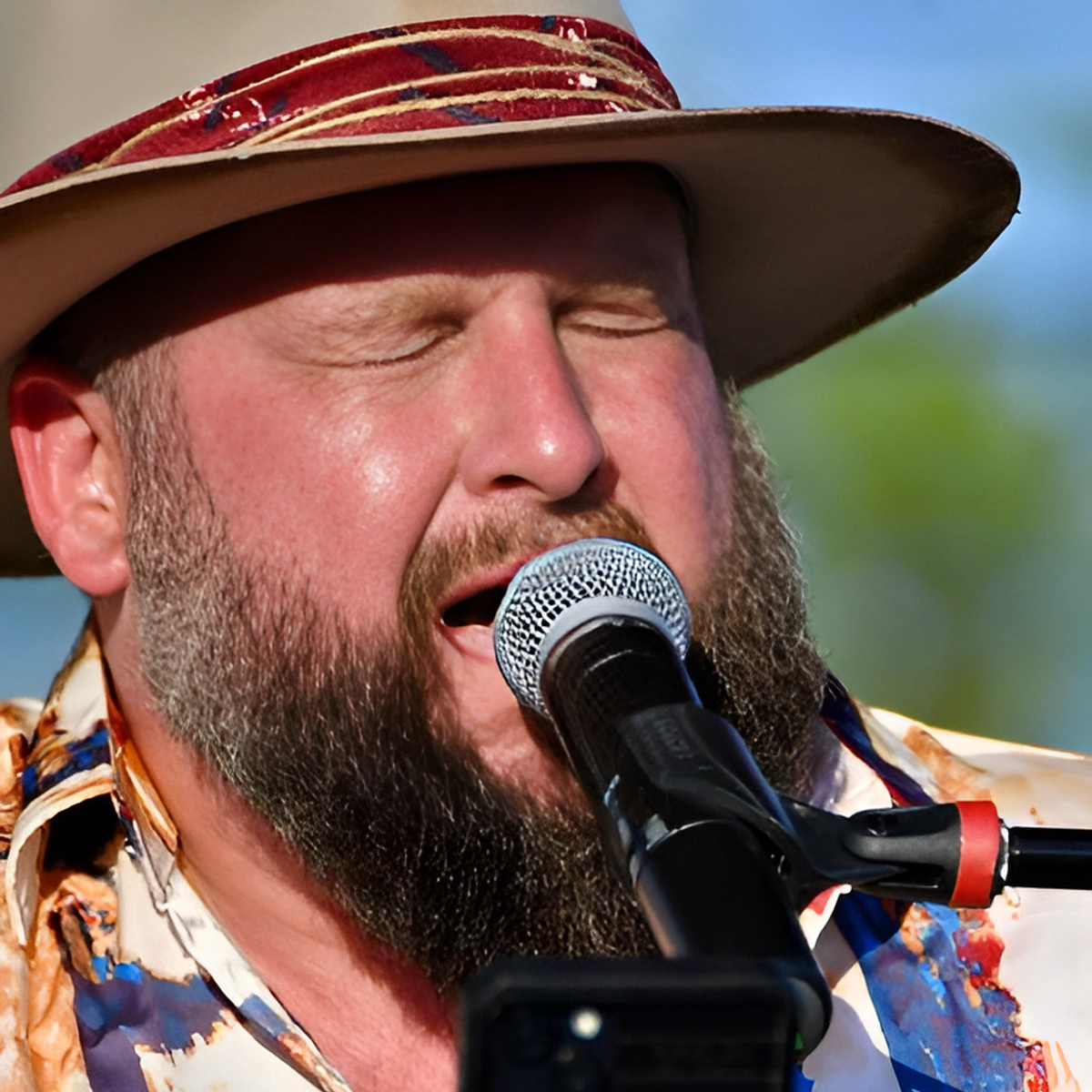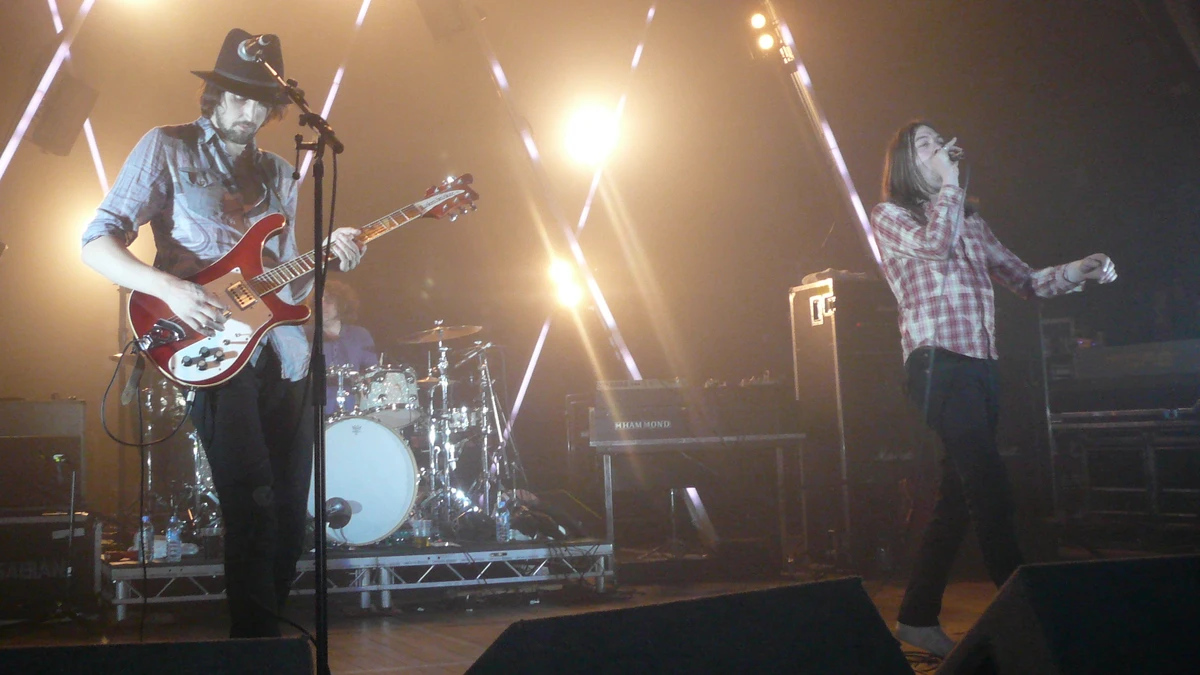

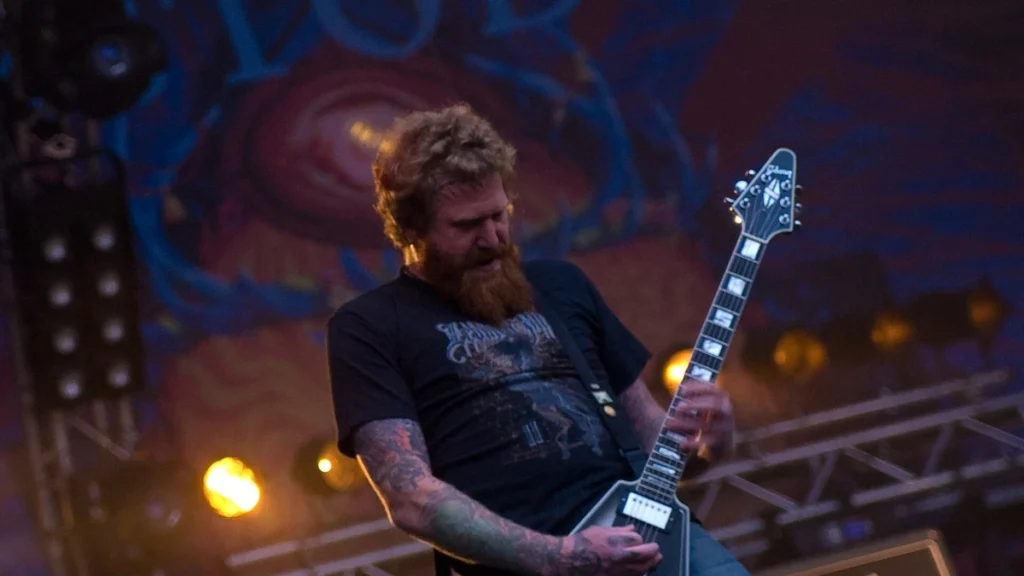
Brent Hinds on stage with Mastodon, the Flying V and the growl that defined a decade of the band's live sound.
Brent Hinds on stage with Mastodon, the Flying V and the growl that defined a decade of the band's live sound.
Mastodon spent last week doing what bands do before a record lands: interviews, previews, the slow drip of press for their ninth studio album, Marrow Deep. What made this cycle different is that it is the first one without Brent Hinds, and the first anniversary of his death fell in the middle of it.
Hinds left Mastodon in March 2025. Five months later he was killed in a motorcycle accident. On 20 August, one year on, an interviewer finally put the question to the two men sitting in front of the camera: what would Brent have made of this album?
Two Bandmates, Two Very Different Answers
Drummer and vocalist Brann Dailor and bassist and vocalist Troy Sanders were speaking to Metal Injection when the question landed. Sanders did not take the bait. “That has not crossed my mind,” he replied, and left it there.
Dailor went the other way, and the answer he gave arrived in two pieces. The first was a laugh and a blunt verdict: Hinds “probably wouldn’t like it very much.” Then, almost immediately, he began qualifying it.
“No, he might. I mean, I don’t know. Maybe there’s aspects of it that he would dig,” Dailor said, before landing on the reason for his doubt: “he wasn’t the biggest fan of heavy stuff toward the end. He was kind of always trying to steer us away from having that.”
It is a small detail that says a great deal about the band’s last few years. Whatever else was going on, the creative argument inside Mastodon was about weight, and Hinds was the one pulling in the lighter direction.
What Dailor Said He Actually Believes
Having laughed off the question, Dailor then answered it properly, and the second answer is the one worth keeping. Asked to think it through, he said he would “have to think that there’d be a majority of the record that Brent would dig,” and that if Hinds were still around and still in the band, he would have wanted to “put his stamp on some of these tracks. Put his shine on some of it, the way he always did.”
That is not a throwaway line. It is a working musician describing a specific missing contribution: not just a guitarist, but a particular kind of decoration that Hinds put on Mastodon songs and nobody else did.
Hinds had no creative input on Marrow Deep at all. The record is, in the literal sense, the first Mastodon album made without him. That does not mean he is absent from it.
The First Single Was Already About Him
“Your Ghost Again,” the first single from Marrow Deep, arrived on 2 June as the band’s first new music without Hinds. Across four and a half minutes it seesaws between angsty passages and swirling psychedelia, and Dailor explained at the time exactly where it came from. The song is “about being in those familiar places you used to be with people, which for us is in the studio,” he said. “I just kept seeing him out of the corner of my eye, where he would normally be with his guitar.”
He described it as the ordinary machinery of grief rather than anything mystical: “your mind plays tricks on you, especially so soon after someone dies and you’re in the places where they always were. You just see them.”
Whatever else Marrow Deep turns out to be, it was written in a room that still had a Brent Hinds-shaped gap in it, by people who kept catching themselves looking at it.
Mastodon Are a Five-Piece Now
The other change is structural. Mastodon have moved from four members to five, bringing in guitarists Nick Johnston and João Nogueira. For a band whose sound was built on the interplay between two very distinct guitar voices, adding a body rather than straight-swapping one is a real statement about how they intend to cover the gap.
Dailor and Sanders discussed the transition alongside the album in the same interview, and the tour that follows it. The Poisonous Weapons Tour runs 27 dates across the United States and Canada, opening in Orlando on 16 September and closing in Dallas on 24 October, with Deafheaven and Alcest opening. That is a bill leaning hard into atmosphere and blackgaze rather than straight-ahead thrash, which tells you something about where the band thinks this record sits.
The routing is a proper coast-to-coast slog rather than a victory lap: Orlando, then Asheville, Pittsburgh, Philadelphia, Boston and Brooklyn inside the first nine days, before the run turns west. Tickets went on sale in early June, days after the tour was announced alongside the first single. For a band absorbing two new guitarists in public, twenty-seven nights is the fastest possible way to find out whether the new arrangement holds up away from a studio.
His Own Band Marked the Date Too
The same anniversary produced a second release. West End Motel, the soul, gospel and heartland rock outfit Hinds founded, put out a new song called “Return of the Kid” on 20 August, timed to the day. It features Matt Pike, the High on Fire frontman, and it sounds nothing like Mastodon.
West End Motel was never a side project in the throwaway sense. It was the outlet for the parts of Hinds that a metal band could not hold: gospel phrasing, country storytelling, harmonised guitar lines that resolve rather than lurch. Releasing a song from it on the exact date of his death reads as a deliberate choice by the people he left behind, and a pointed one.
Consequence described the track as sitting somewhere between Bruce Springsteen and The Band, country rock and gospel laid over a rock and roll backbone. That was the other half of Hinds, the half that spent years trying to pull Mastodon away from the heavy end, finally getting the last word on its own terms.
Two records, one week, one anniversary. One of them is a heavy album by the band he left. The other is a country-gospel song by the band he built. Fans who only ever knew the Flying V and the growl are getting a fuller picture of the man in retrospect than they did at the time.
What Comes Next for the Rock Charts
Marrow Deep is not out yet, and how it lands is genuinely open. Mastodon have never been a band that repeats itself, and a lineup change of this size usually shows up in the songs whether the band intends it or not. What the press cycle has already told us is that the record is heavy, that at least one member suspects Hinds would have pushed back on that, and that the same member thinks most of it would have won him over anyway.
Rock and metal have had a punishing run of these stories lately, from lineup upheavals to long silences finally breaking. This one is unusual only in how directly the surviving members were willing to answer it on camera.
Dailor could have given the safe reply that Sanders gave. Instead he laughed, said the awkward thing, corrected himself, and then explained what he actually misses about the way Brent Hinds played guitar. A year out, that reads less like promotion and more like someone still working it out.
For fans, the useful thing is that neither answer was managed. Bands in this position usually settle on one line and repeat it for six months of press. Mastodon gave two contradictory ones inside thirty seconds, and both were true: the record probably is heavier than Hinds wanted, and he probably would have found plenty on it to make his own. Grief and a release schedule rarely sit this close together, and it shows.
This article was AI-assisted and edited for accuracy.
About Author